
Investing in an industrial baler is a major capital expenditure that will dictate the efficiency of your waste management for years to come. Whether you are dealing with mountains of corrugated cardboard (OCC), plastic film, or PET bottles, the first and most critical decision you need to make is choosing the machine’s configuration.
The fundamental choice boils down to two categories: Vertical Balers and Horizontal Balers. While both serve the same ultimate purpose—compacting waste into dense, stackable cubes—their operational methods, capacities, and space requirements are vastly different. Here is a comprehensive guide to help you choose the right machinery for your facility.
Vertical Balers: Compact, Cost-Effective, and Versatile
As the name suggests, a vertical baler compresses material from the top down. The operator manually loads the waste into the chamber, closes the safety gate, and the hydraulic ram pushes downwards to crush the material.
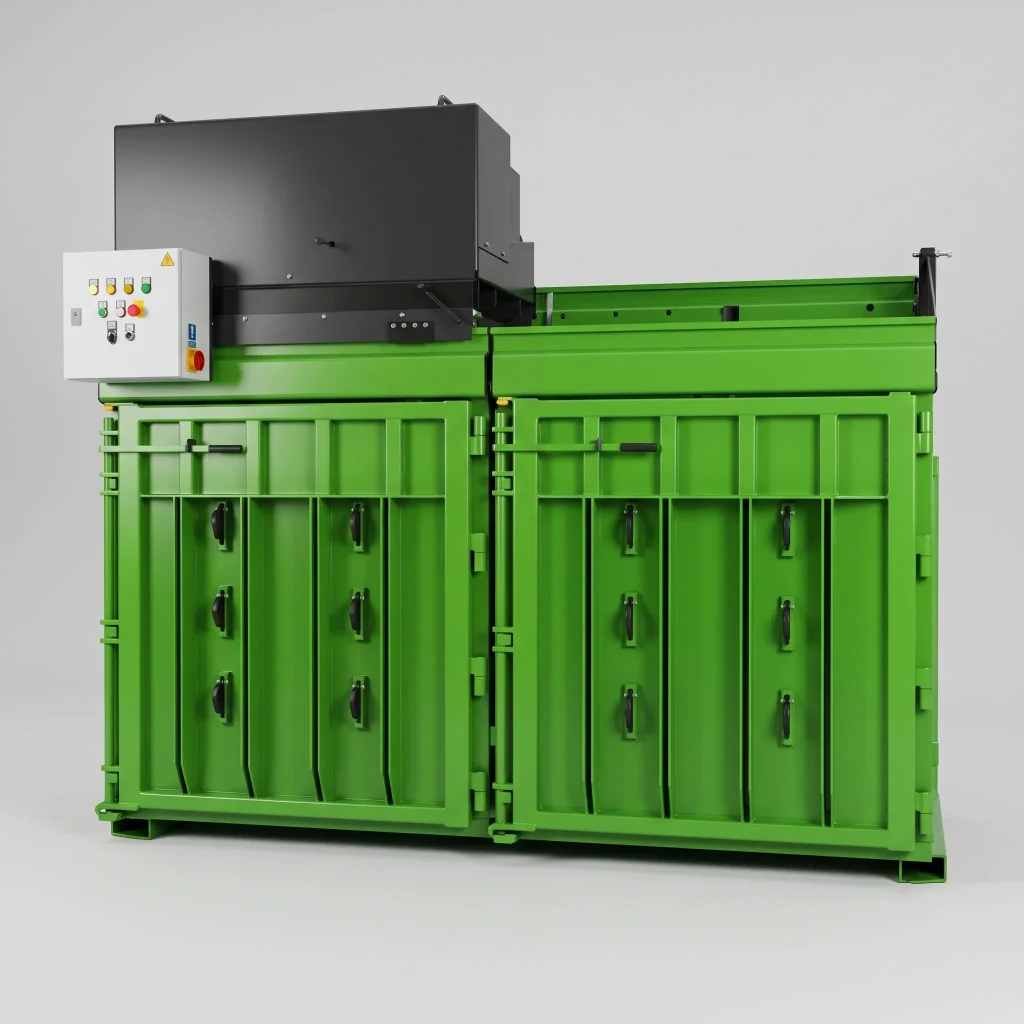
Key Advantages of Vertical Balers
- Minimal Footprint: Because the ram operates vertically, these machines take up very little floor space. They can easily be tucked into the corner of a warehouse, the backroom of a retail store, or near a loading dock.
- Cost-Effective: Vertical balers are significantly less expensive to purchase and install than their horizontal counterparts.
- Versatility: They are excellent for facilities that need to process multiple types of materials. An operator can bale a batch of cardboard, tie it off, and then immediately switch to baling plastic wrap.
The Limitations
Vertical balers require manual labor. An operator must physically load the material, wait for the compaction cycle, and manually thread and tie the baling wire once the bale is complete. Because of this, they are best suited for low to medium-volume operations (typically generating less than 3–5 tons of waste per day).
Horizontal Balers: High Capacity and Automation
Horizontal balers operate on a completely different scale. The compaction ram moves horizontally (side-to-side) to crush the material. These machines are the heavyweights of the recycling industry.
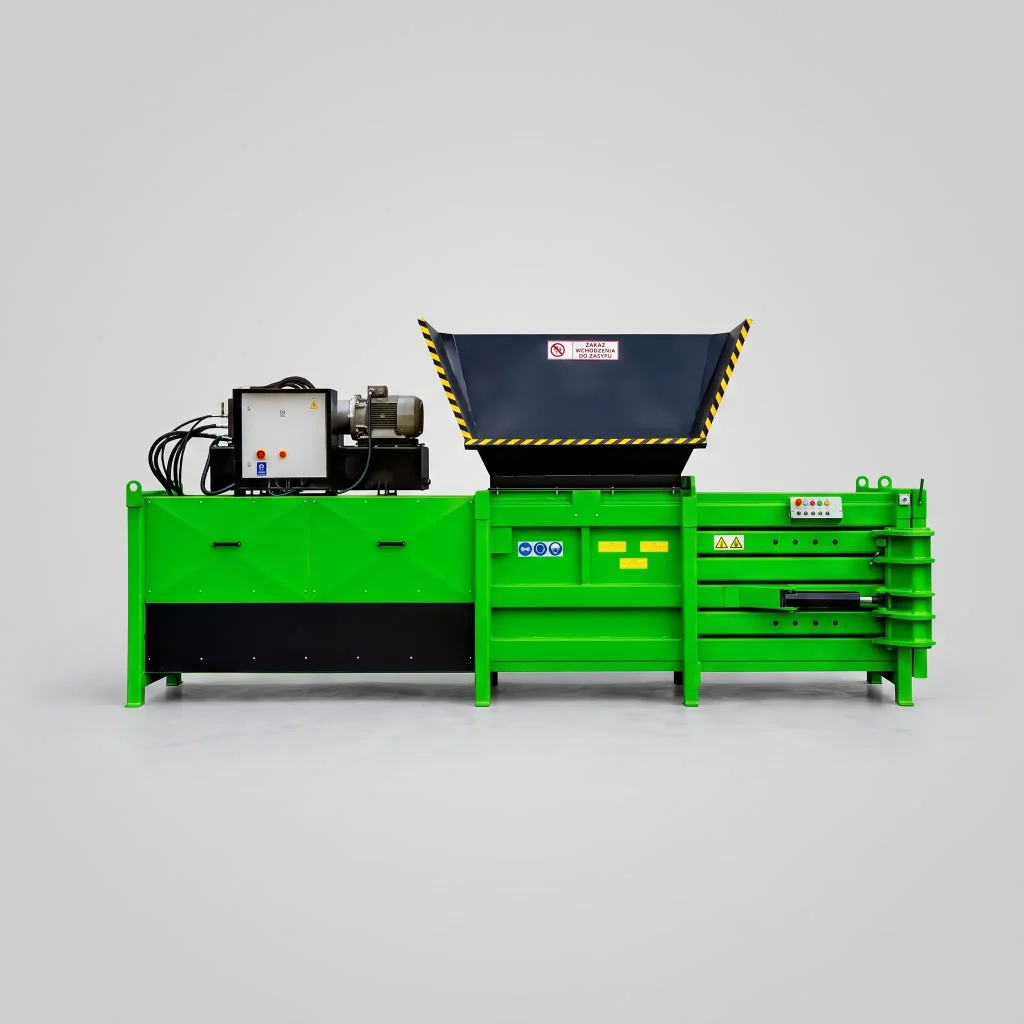
Key Advantages of Horizontal Balers
- Massive Throughput: Horizontal balers are designed for continuous, high-volume processing. They can handle anywhere from a few tons to over 50 tons of waste per hour.
- Automation: The biggest advantage is the reduction in manual labor. Horizontal balers can be fed continuously via conveyor belts, forklift tippers, or air-transport systems. Furthermore, fully automated models (like channel presses) feature auto-tying mechanisms, meaning the machine binds the bales with wire completely on its own.
- Mill-Ready Density: They apply immense hydraulic pressure, creating extremely dense, uniform bales that maximize transport payload and command the highest market prices from paper mills and recycling centers.
The Limitations
Horizontal balers require a significant amount of floor space and ceiling height for conveyor systems. They represent a much higher initial capital investment and require dedicated, three-phase power supplies and professional installation. They are designed for high-volume operations, such as Material Recovery Facilities (MRFs), large distribution centers, and manufacturing plants.
Key Factors to Consider When Choosing
To make the right choice, evaluate your operations against these three metrics:
- Daily Waste Volume: If your facility generates less than 5 tons of recyclable waste per day, a vertical baler (e.g., the Bartontech 50 Plus) will offer the fastest ROI. If you generate more than 10 tons a day, the labor costs of manually feeding a vertical baler will quickly outweigh the higher purchase price of a horizontal system.
- Available Space: Do you have the luxury of dedicating a large section of your warehouse to a continuous baling line? If floor space is at a premium, vertical is the only way to go.
- Labor Costs: Calculate the hourly cost of your staff. If employees are spending several hours a shift breaking down boxes and loading a manual machine, upgrading to an automated horizontal baler with a conveyor system will drastically reduce labor overhead.
Conclusion
There is no “one size fits all” in waste management. A vertical baler is the perfect, budget-friendly workhorse for retail and mid-sized warehouses. Conversely, a horizontal baler is a high-speed, automated powerhouse essential for large logistics hubs and recycling centers. By accurately assessing your daily waste volume and available space, you can invest in the machinery that will deliver the best long-term efficiency for your business.