
Selecting the right industrial baler is a critical decision that directly impacts your facility’s operational efficiency and waste management costs. While both vertical and horizontal balers serve the fundamental purpose of compacting recyclables like cardboard, plastics, and paper into dense bales, their applications, capacities, and footprints differ significantly.
If you are upgrading your warehouse, sorting facility, or manufacturing plant, understanding the technical distinctions between these two types of machinery is essential to maximizing your Return on Investment (ROI).
Vertical Balers: The Space-Saving Solution
Vertical balers process waste with a downward pressing force. The operator manually loads the material into the chamber from the front, closes the safety gate, and initiates the compaction cycle. Once the chamber is full, the bale is tied off manually and ejected.
Key Advantages:
- Minimal Footprint: Because the hydraulic cylinder operates vertically, these machines take up very little floor space. This makes them ideal for retail backrooms, supermarkets, or smaller warehouses where every square meter counts.
- Lower Initial Investment: Vertical models are generally more cost-effective to purchase and install compared to their horizontal counterparts.
- Versatility: Machines like the Bartontech 50 Plus are highly adaptable and can easily switch between compacting cardboard and plastic film.
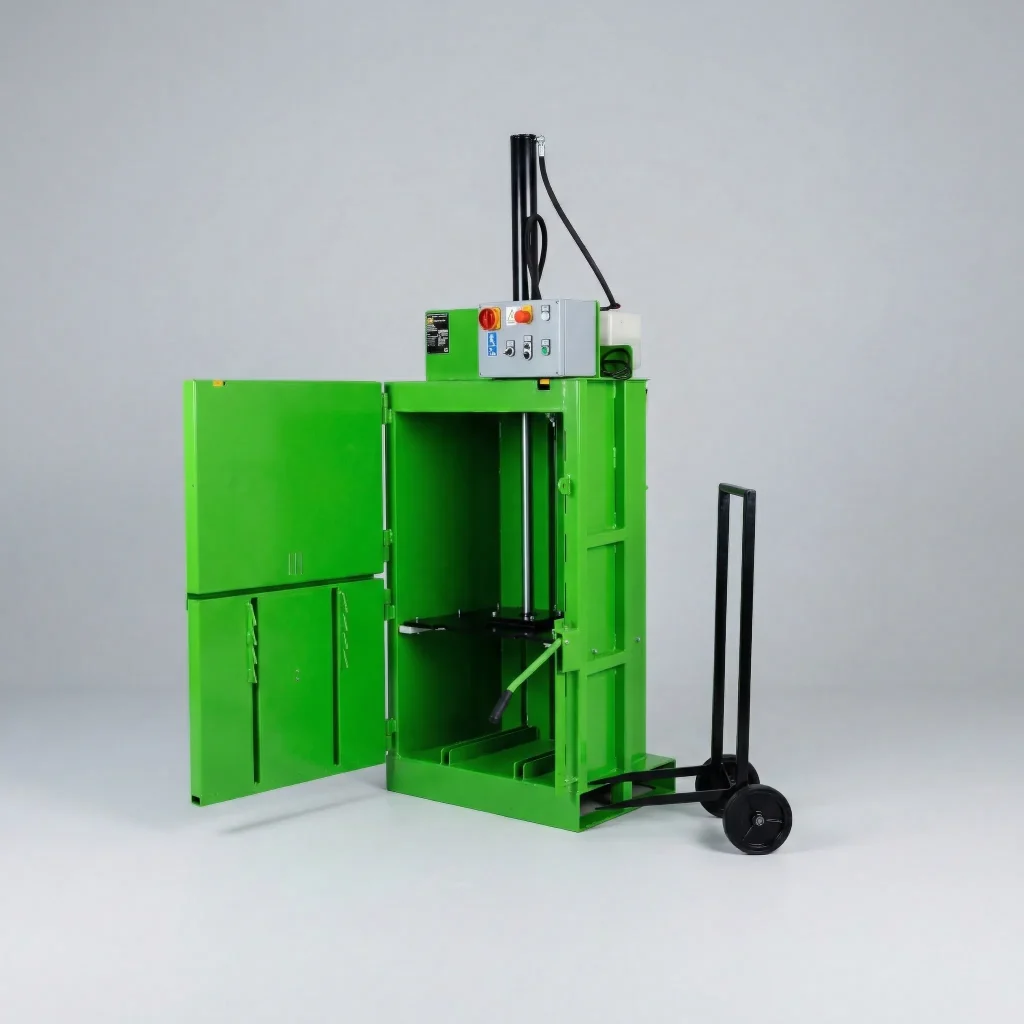
Best For: Facilities generating lower to medium volumes of waste, where manual loading does not disrupt core daily operations.
Horizontal Balers: The Industrial Workhorses
Horizontal balers (or channel presses) operate with a horizontal pressing ram. They are designed for continuous, high-volume processing and are typically integrated into larger waste management systems.
Key Advantages:
- High Throughput & Automation: Horizontal balers can process massive amounts of material continuously. They are often fed by conveyor belts, cyclones, or forklifts, drastically reducing manual labor.
- Superior Bale Density: Models like the Bartontech 600 Max or 800 Plus generate immense pressing force, creating heavy, mill-size bales that maximize transport payload.
- Automated Tying: Advanced horizontal systems feature automated wire-tying mechanisms, allowing the machine to operate with minimal human intervention.
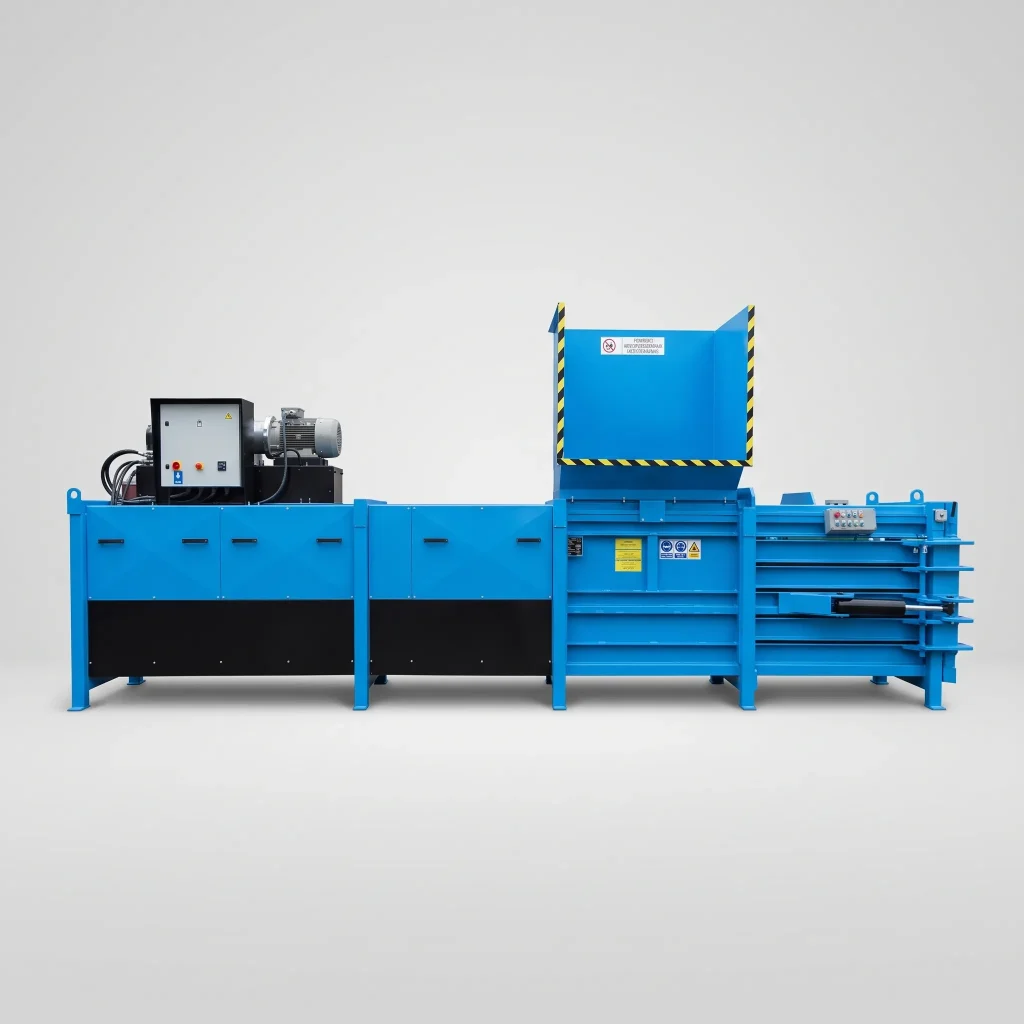
Best For: Large-scale distribution centers, dedicated recycling facilities, and industrial plants processing several tons of waste per day.
Key Decision Factors
When choosing between a vertical and horizontal system, consider the following operational parameters:
- Daily Waste Volume (Tonnage): Throughput (T) is often evaluated by the formula T = V / C (where V is the volume of waste and C is the cycle time). If your daily waste generation exceeds 2-3 tons, the continuous feeding capability of a horizontal baler becomes a logistical necessity.
- Available Floor Space: A vertical baler might require only 2 to 3 square meters. A horizontal baler system, complete with an infeed conveyor and bale run-out table, requires a dedicated operational zone.
- Labor Costs: While vertical balers require manual loading and tying, horizontal balers automate these processes. If internal labor costs are high, the automation provided by a horizontal press will quickly offset its higher purchase price.
Conclusion
There is no one-size-fits-all solution in waste management. If floor space is strictly limited and your waste volumes are manageable, a robust vertical baler is a highly efficient choice. However, if your facility is dealing with industrial-scale waste streams and minimizing labor is a priority, investing in a horizontal channel press is the most profitable path forward.