
Hydraulic systems are the beating heart of every industrial horizontal baler and vertical press. Their condition dictates the pressing force, cycle speed, and overall reliability of your entire machinery park. Under intensive operation, where equipment like the Bartontech 600 Max or 800 Plus processes tons of cardboard and plastics daily, neglecting hydraulic maintenance can lead to costly downtime.
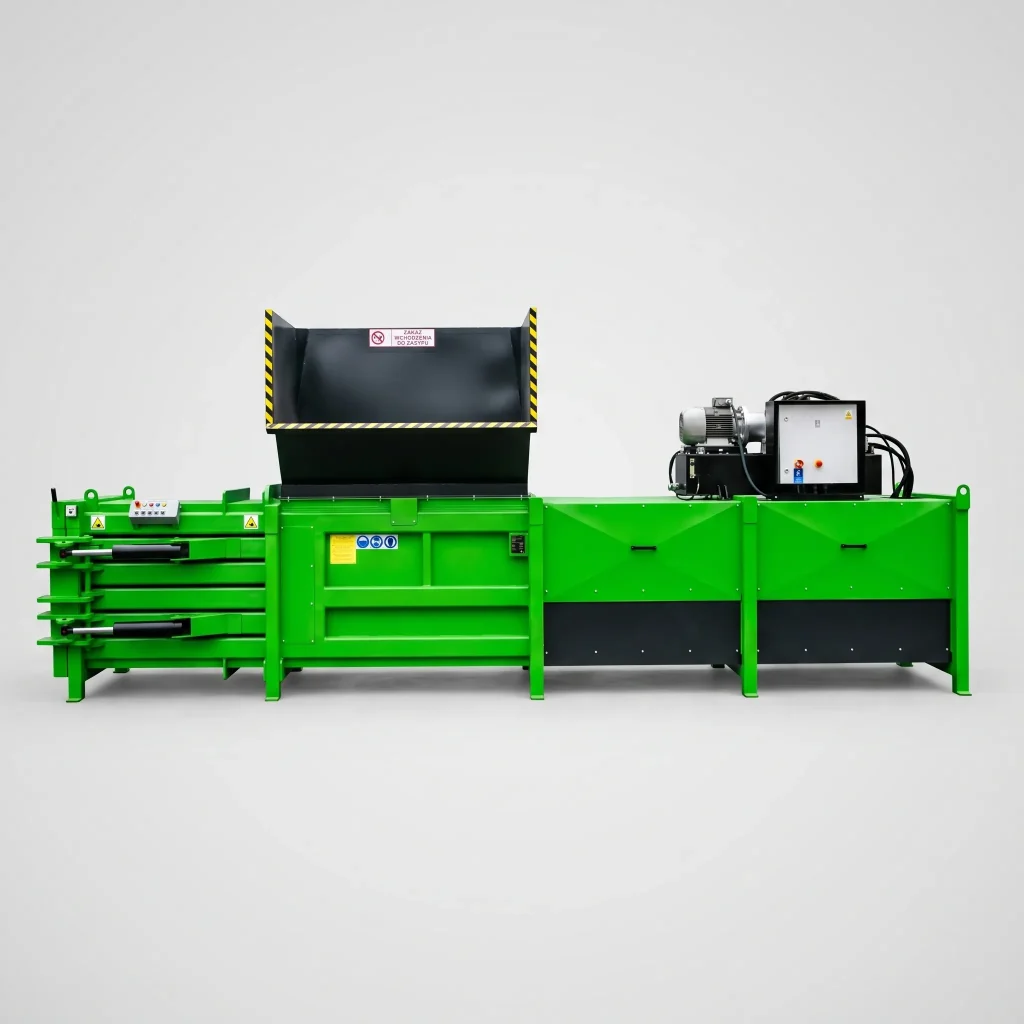
How should you properly care for valves, cylinders, and filters to maximize the lifespan of your recycling machinery?
The Physics of Compaction and System Health
The pressing force (F) in balers is a direct result of the operating pressure (p) of the oil and the active surface area of the piston (A), according to the fundamental equation F = p * A. Any pressure drop—whether caused by leaks, pump wear, or contaminated valves—drastically reduces compaction efficiency. When this happens, the machine requires more time and energy to form a bale of the target density, which directly translates to higher operating expenses (OPEX).
The Three Pillars of Hydraulic Maintenance in Balers
1. Cleanliness and Temperature of Hydraulic Oil
Oil in a hydraulic system is not just a working fluid; it also lubricates and cools high-precision components.
- Filtration: Solid contaminants (metal shavings, dust from the sorting hall) act like abrasive paste on cylinder seals and valve spools. It is strictly necessary to adhere to the replacement intervals for both suction and return filters.
- Temperature: The optimal operating temperature for hydraulic oil is typically between 40°C and 50°C. Overheating causes a drop in fluid viscosity, which leads to internal leaks in pumps and proportional valves. It is crucial to regularly clean the oil-to-air coolers of the dust that is omnipresent when processing waste paper.
2. Monitoring Valves and Directional Controls
Valve manifolds direct the flow of massive oil streams at pressures reaching several hundred bars. Relief and pressure-reducing valves must be precisely calibrated to protect the pump from overloads.
- Diagnostics: Any delays in the machine’s operating cycle, loud coil noises, or uneven movement of the press ram are the first signs that directional control valves may require cleaning or seal (O-ring) replacements.
3. Inspection of Main Cylinders
The main cylinder in horizontal balers absorbs the heaviest loads. Its failure means a complete halt in operations.
- Seals and Wipers: Piston rods should be checked regularly for leaks and deep scratches. Wiper rings must effectively remove debris from the rod surface during the return stroke, preventing dirt from entering the cylinder barrel.
Maintenance Schedule – Best Practices
To keep your equipment in optimal condition, implement the following schedule:
- Daily (Operator): Visual inspection for leaks, checking the oil level in the tank, and listening for unusual noises around the hydraulic pump.
- Every 1-3 Months (Maintenance Team): Lubricating guide rails, checking operating pressures on pressure gauges, and cleaning the oil cooler.
- Every 12 Months / 2000 MTH (Specialist Service): Taking oil samples for laboratory analysis, replacing filters, comprehensive valve diagnostics, and control system calibration.
Investing in the regular service of hydraulic systems is the most straightforward path to lowering the Total Cost of Ownership (TCO) of your recycling machinery.