
An industrial baler from Bartontech applies immense hydraulic pressure to transform mountains of waste into compact, uniform blocks. However, once the ram retracts, the only thing keeping thousands of pounds of expanding material from bursting apart is your choice of strapping.
Selecting the wrong binding material is a costly mistake. A snapped wire or broken twine not only creates a massive mess on your warehouse floor, but it also poses a severe safety hazard to your operators. Furthermore, recycling mills often have strict requirements regarding how bales must be tied. Here is a comprehensive guide to choosing the right baling consumables for your specific machine and material.
1. Steel Baling Wire (The Heavyweight Champion)
Steel wire is the undisputed standard for high-capacity recycling operations, particularly those utilizing horizontal balers. It offers unparalleled tensile strength and durability.
- Black Annealed Wire: This wire undergoes a special heating process (annealing) that makes it highly flexible without sacrificing strength. It is the most common choice for single-ram horizontal balers because it is easy for automated tying systems to bend and knot.
- Galvanized Wire: Coated in a layer of zinc, galvanized wire is highly resistant to rust and corrosion. It is ideal for outdoor storage or for baling materials that contain moisture, such as agricultural waste or aluminum beverage cans.
Best for: Horizontal channel presses, high-density cardboard (OCC), PET bottles (which have a high “memory effect” and expand violently), and metal cans.
2. Polyester (PET) and Woven Strapping
Plastic strapping has seen a massive surge in popularity, especially for facilities using vertical balers. High-quality PET strapping can rival the tensile strength of light-gauge steel wire but comes with distinct operational advantages.
- Safety: Unlike steel wire, plastic strapping does not have sharp edges. If a strap is over-tensioned and snaps, it is far less likely to cause a laceration injury to the operator.
- Flexibility: It has a slight elastic memory. If a bale of cardboard expands slightly after leaving the chamber, PET strapping can stretch a few millimeters to accommodate the shift without breaking.
Best for: Vertical balers (like the Bartontech 50 Plus), medium-density cardboard, plastic film (LDPE), and facilities prioritizing operator safety over automated tying.
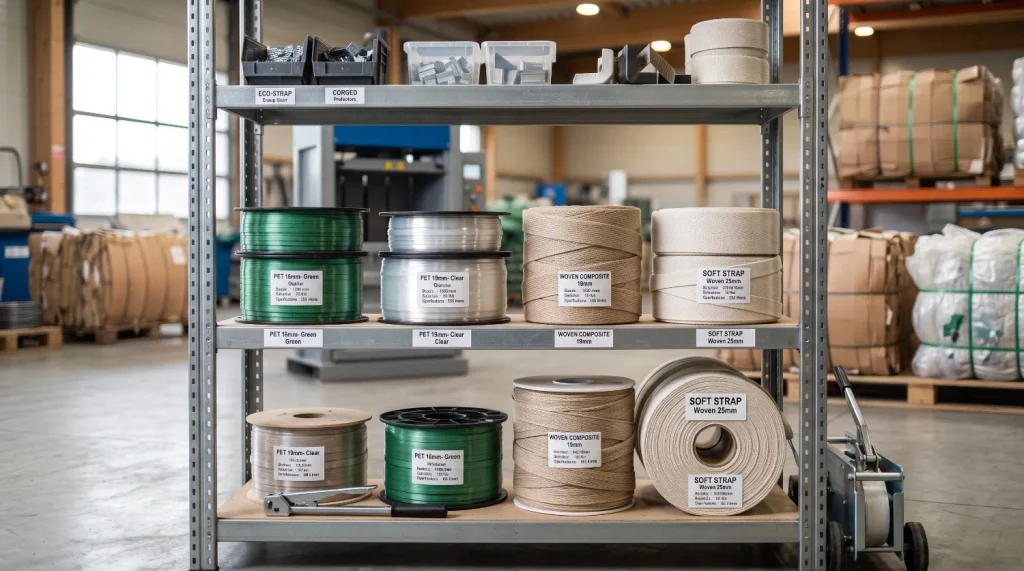
3. Baling Twine (The Cost-Effective Alternative)
Industrial baling twine (usually made of polypropylene) is a lightweight, cost-effective binding material. It is typically supplied in large spools and is manually tied by the operator.
- Mill Preferences: Some paper mills prefer bales tied with twine or plastic rather than steel wire. Steel wires can accidentally end up in the pulping machines, causing catastrophic damage to the mill’s equipment. Twine is much safer for the recycling pulper.
- Limitations: Twine has the lowest tensile strength of the three options. It should never be used for highly expansive materials like PET bottles or heavy materials like tires.
Best for: Small vertical balers, office paper, light corrugated cardboard, and textile recycling.
How to Make the Final Decision
When outfitting your facility, always consult your baler’s manufacturer guidelines first. Fully automated horizontal balers from Bartontech are engineered for specific gauges of black annealed wire, and substituting this with twine will break the auto-tying mechanism.
For vertical balers, the choice depends on your material and your buyer. Always ask your recycling broker or the mill purchasing your bales: “Do you have a strapping preference?” By aligning your consumables with your machine’s capabilities and the market’s demands, you ensure safe operations and maximum profit from every bale.