
Expanded Polystyrene (EPS), commonly known as styrofoam, is an exceptional packaging material. It is lightweight, shock-absorbent, and highly insulating. However, the very properties that make it perfect for protecting fragile goods make it an absolute nightmare for warehouse managers and logistics directors.
Because EPS is composed of roughly 98% air and only 2% plastic, it takes up a massive amount of physical space while weighing almost nothing. If your business regularly receives appliances, electronics, or industrial parts, you already know the problem: overflowing bins, cluttered loading docks, and astronomical waste disposal bills. The solution? Industrial EPS compactors.
The Cost of Ignoring EPS Waste
Most waste management companies charge by volume (the number of dumpster pickups), not by weight. When you throw loose EPS into a standard skip, you are essentially paying premium transport rates to haul away air.
Furthermore, loose styrofoam breaks apart easily. The small beads spread across the warehouse floor, creating slip hazards and getting caught in forklift wheels or machinery. Treating EPS like standard commercial waste is not just inefficient; it is a direct drain on your operational budget.
How an EPS Compactor Works
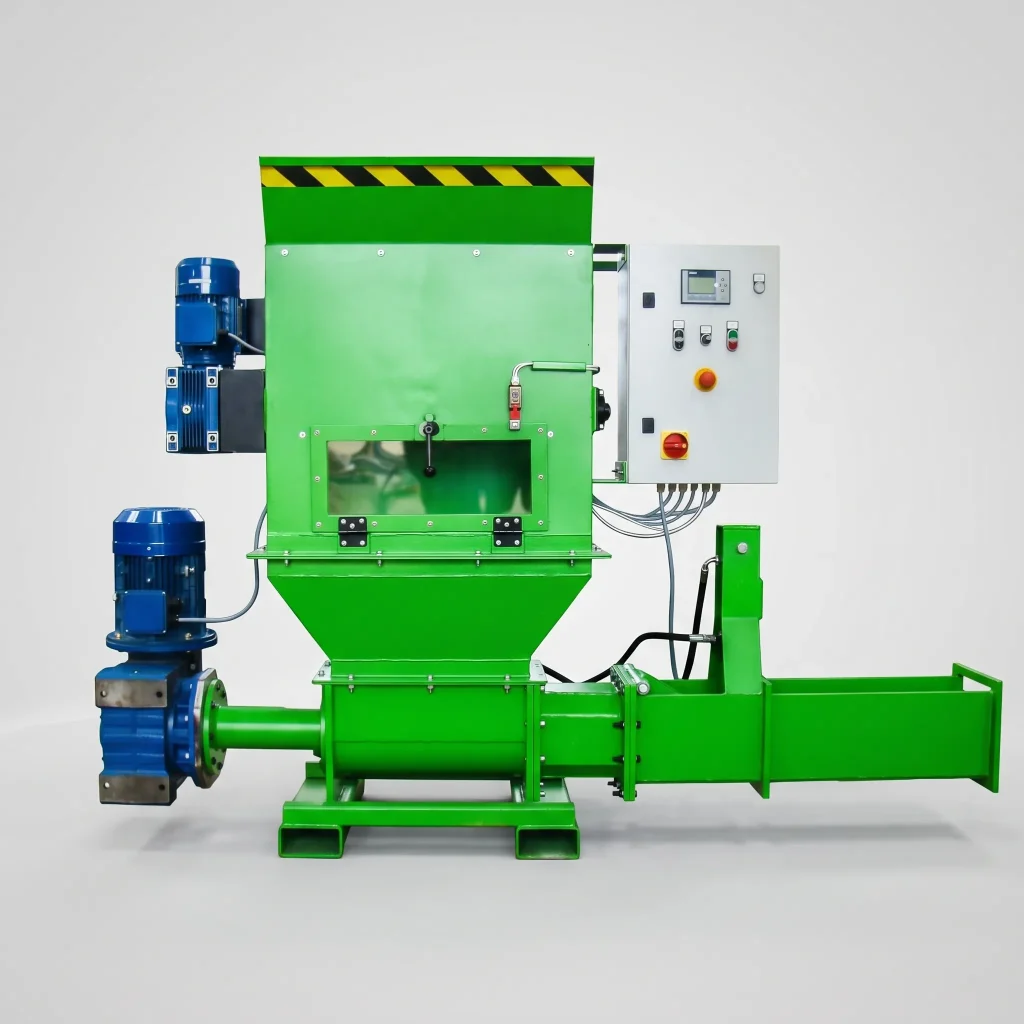
An EPS compactor is a specialized recycling machine designed to crush and densify styrofoam waste. The operation is straightforward yet highly effective:
- Feeding: The operator throws loose EPS packaging into the machine’s large hopper.
- Shredding: A robust internal shredder breaks down the large, bulky shapes into smaller, uniform fragments.
- Compaction: A heavy-duty hydraulic ram or a massive screw mechanism pushes the shredded material through a narrow channel.
- Extrusion: The immense pressure forces the air out of the EPS beads. The material is extruded at the other end as a continuous, extremely dense block.
Through this mechanical process, high-quality machines like the Bartontech Compactor EPS C50 or C200 can achieve a compaction ratio of up to 50:1. This means that 50 cubic meters of loose, chaotic styrofoam waste is reduced to just 1 cubic meter of neat, stackable blocks.
Key Benefits of Integrating an EPS Compactor
1. Reclaiming Warehouse Space
Space is expensive. By compacting EPS at the source, you immediately free up square footage that was previously lost to bulky waste storage. This space can be instantly reallocated for revenue-generating inventory or streamlined forklift traffic.
2. Slashing Transport Costs
By achieving a 50:1 volume reduction, the number of waste collection pickups drops dramatically. If you previously needed a dedicated styrofoam collection once a week, an EPS compactor can extend that interval to once every few months, instantly cutting your haulage invoices.
3. Creating a New Revenue Stream
Perhaps the most significant advantage is the transformation of a waste product into a valuable commodity. While waste collectors charge you to take away loose EPS, recycling mills actively purchase compacted EPS blocks. These dense briquettes are melted down and upcycled into rigid plastics, such as construction insulation boards, park benches, and decorative picture frames.
Choosing the Right Model for Your Facility
When selecting an EPS compactor, the primary metric to consider is your daily throughput requirement:
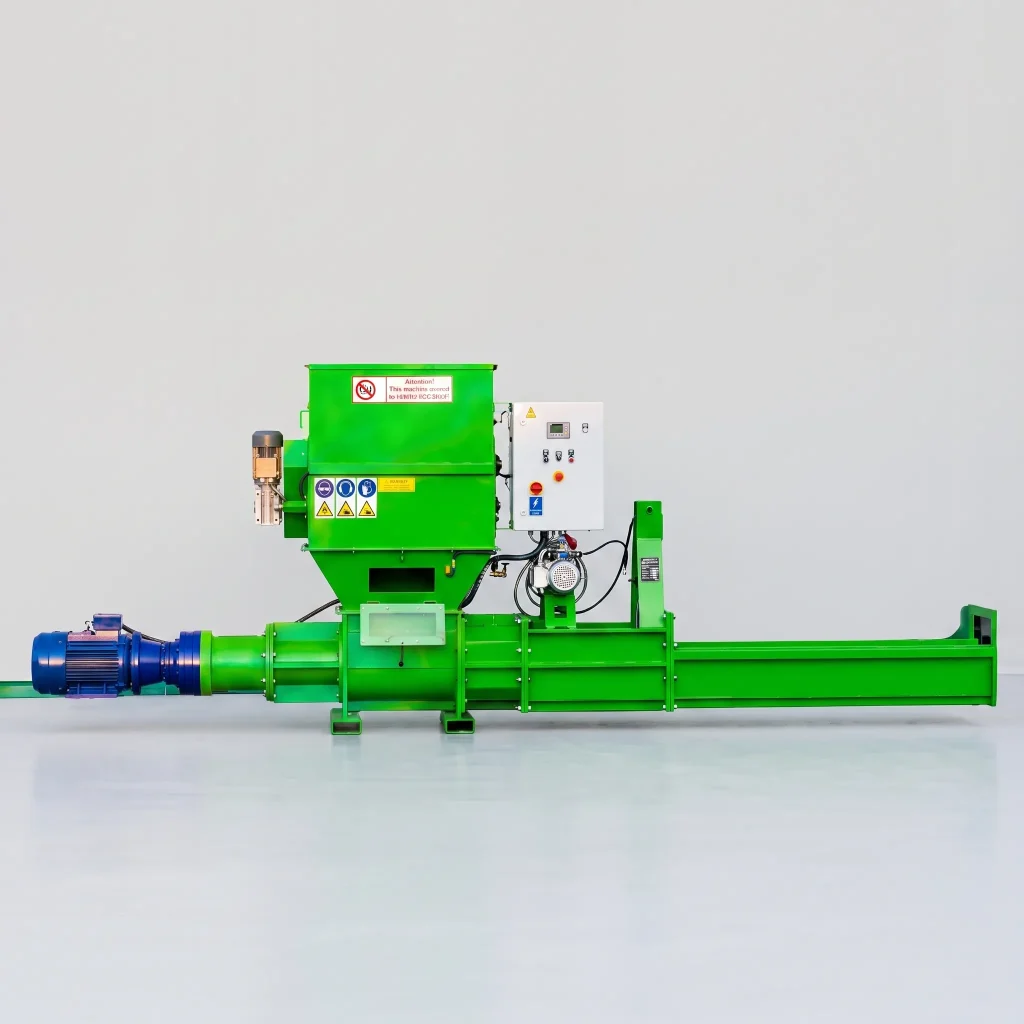
- Low to Medium Volume: If you run a mid-sized retail backroom or a smaller logistics hub, a machine like the Bartontech Compactor EPS C50 is ideal. It offers a compact footprint while efficiently handling moderate amounts of daily packaging waste.
- High Volume & Industrial: For large-scale distribution centers and dedicated recycling facilities, high-capacity models like the Bartontech Compactor EPS C200 are required. These machines feature larger feed openings and more powerful motors to continuously process industrial quantities of EPS without bottlenecking.
Conclusion
Continuing to pay for the disposal of loose styrofoam is an outdated and expensive practice. An EPS compactor is one of the few pieces of warehouse equipment that offers a rapid, easily calculable Return on Investment (ROI)—often paying for itself within the first 12 to 18 months through transport savings and block sales alone.