

Expanded Polystyrene (EPS), commonly known as Styrofoam, is a miracle of modern packaging. It is incredibly lightweight, offers unparalleled shock absorption, and provides excellent thermal insulation. However, these exact properties make it a logistical nightmare for waste management.
EPS is composed of approximately 98% air and only 2% plastic. When distribution centers, appliance retailers, or manufacturing plants dispose of loose EPS packaging, they quickly fill massive roll-off dumpsters with what is essentially trapped air. If your facility is paying standard waste hauling fees for loose styrofoam, you are bleeding money. The solution lies in specialized EPS foam compaction.
Why Standard Balers Fail with EPS
A common mistake facility managers make is attempting to crush EPS foam in a standard vertical or horizontal cardboard baler. While a heavy-duty hydraulic ram will easily crush the styrofoam, the material possesses a severe “memory effect.”
Once the hydraulic pressure is released, the trapped air within the foam cells causes the material to expand violently. This expansion can easily snap standard baling wire or PET strapping, resulting in a dangerous explosion of styrofoam beads across the warehouse floor. Furthermore, standard baling does not remove enough air to make the material dense enough for profitable transport.
To process styrofoam efficiently, you need machinery designed to fundamentally alter its physical structure.
The Mechanics of EPS Compaction
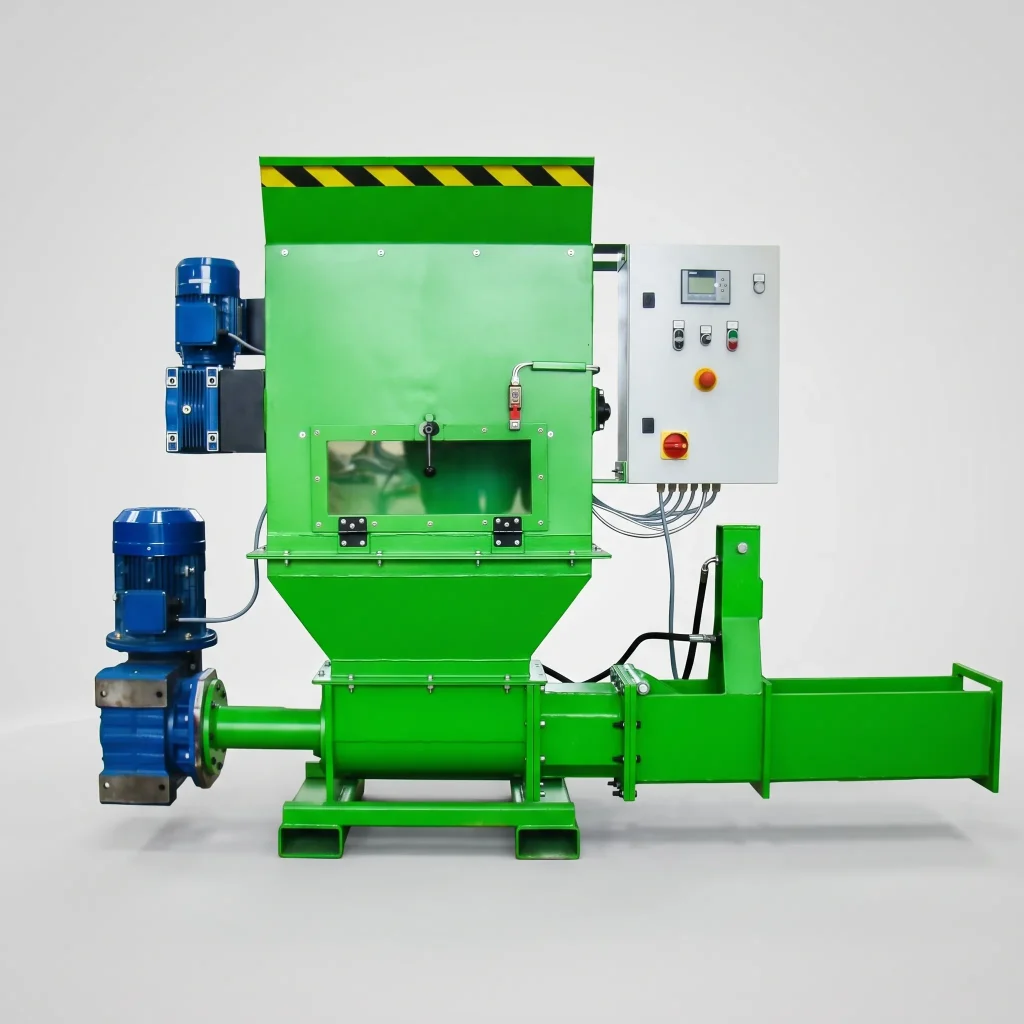
Instead of simply pressing the material, specialized EPS compactors (often called briquette presses) use a completely different mechanical process to achieve a staggering compaction ratio of up to 50:1.

1. Shredding (The Pre-Crusher)
Before compaction can occur, the bulky EPS molds must be broken down. The operator feeds the styrofoam into a hopper equipped with rotating twin-shaft shredders. These heavy-duty blades tear the large blocks into smaller, manageable chunks (typically 1 to 2 inches in diameter), breaking open a large percentage of the air cells in the process.
2. Screw Extrusion (The Compaction Phase)
Once shredded, the material falls into a chamber containing a powerful, rotating steel auger (screw). This screw continuously forces the EPS forward through an increasingly narrow channel. As the foam is pushed through this extrusion die, the extreme friction and mechanical pressure squeeze out the remaining air.
3. Briquetting
The styrofoam emerges from the machine in the form of a continuous, highly dense, solid log or “briquette.” These logs are incredibly rigid, can be easily stacked on standard pallets, and have completely lost their memory effect—they will not expand or break apart.
The Financial ROI of EPS Briquettes
Investing in an EPS compactor transforms a costly waste stream into a highly profitable commodity.
By achieving a 50:1 volume reduction, a facility that previously required a styrofoam dumpster pickup every two days might only need a pickup once every three months. Moreover, dense EPS briquettes are highly sought after by plastic recyclers. They are melted down and repurposed into rigid plastic products like picture frames, crown molding, and park benches. Instead of paying hauling fees, your facility can sell stacked pallets of EPS briquettes by the ton on the global recycling market.
Conclusion
Handling EPS packaging waste does not have to be a drain on your operational budget or consume massive amounts of floor space. By utilizing a specialized screw-extrusion compactor, businesses can conquer the 98% air problem. Upgrading to the right EPS processing equipment from Bartontech not only slashes your waste disposal costs but also establishes a lucrative, closed-loop recycling revenue stream for your facility.